Swim lessons. Swim team. Summer afternoons at the community pool. For most kids, swimming is a fixture of childhood, and that's a wonderful thing. Swimming is great exercise, it builds confidence, and it's a life skill.
What parents don't always realize is that children's skin handles chlorine differently than adult skin does. Not dramatically differently, but enough that the dryness, redness, and irritation that adults might notice only occasionally can appear faster and more intensely in kids. Understanding why, and knowing what to do about it, is the kind of thing that makes a real difference across an entire swim season.
Why chlorine affects children's skin more readily
Children's skin is not simply smaller adult skin. It has structural differences that influence how it responds to chemical exposure like chlorine.
The outer skin layer is thinner. The stratum corneum, the outermost layer of skin that provides the primary barrier against the environment, is less developed in children than in adults. This means it has less inherent protection against external chemical contact.
Children produce fewer natural oils. The sebaceous glands that produce the natural oils which help protect skin moisture are less active in childhood than in adulthood. Less natural oil means less natural protection, and chlorine strips what's there more quickly.
More surface area relative to body size. Children have a higher ratio of skin surface area to body weight than adults. In practical terms, this means a greater proportion of their body is in direct contact with pool chemicals during a swim.
Extended time in the water. Kids don't tend to swim in short, measured intervals. Swim lessons run for a set period. Pool playtime stretches as long as the afternoon allows. Swim team practice has its own schedule. Children often spend significantly more continuous time in the pool than casual adult swimmers, which translates to more sustained chlorine exposure.
What to look for
The most common signs that your child's skin is reacting to chlorine exposure:
- Red or irritated skin on the arms, legs, or torso after swimming
- Complaints of itching or discomfort after getting out of the pool
- Dry, flaky patches that develop over the course of a swim season
- Pool rash, irritated patches that appear after swimming
- Chlorine smell that lingers on their skin even after a bath or shower
These are the typical signs of chlorine contact on skin that hasn't been adequately protected. They're worth taking seriously not because they indicate a serious problem, but because they're preventable, and because a child who's itchy and uncomfortable after swimming is a child who may start to resist the activity you want them to enjoy.
If your child has a diagnosed skin condition, speak with their pediatrician or dermatologist before adding any new product to their routine.
The most effective thing parents can do
Most parents reach for lotion after their kids get out of the pool. Post-swim moisturizer helps with recovery, but it's responding to chlorine contact that's already happened. The more effective intervention is before the swim.
A pre-swim barrier applied to your child's skin before they get in the pool creates a protective layer that helps reduce how much direct chlorine contact their skin experiences during the session. Applied before swim lessons, before practice, before a day at the pool, it works from the moment they enter the water.
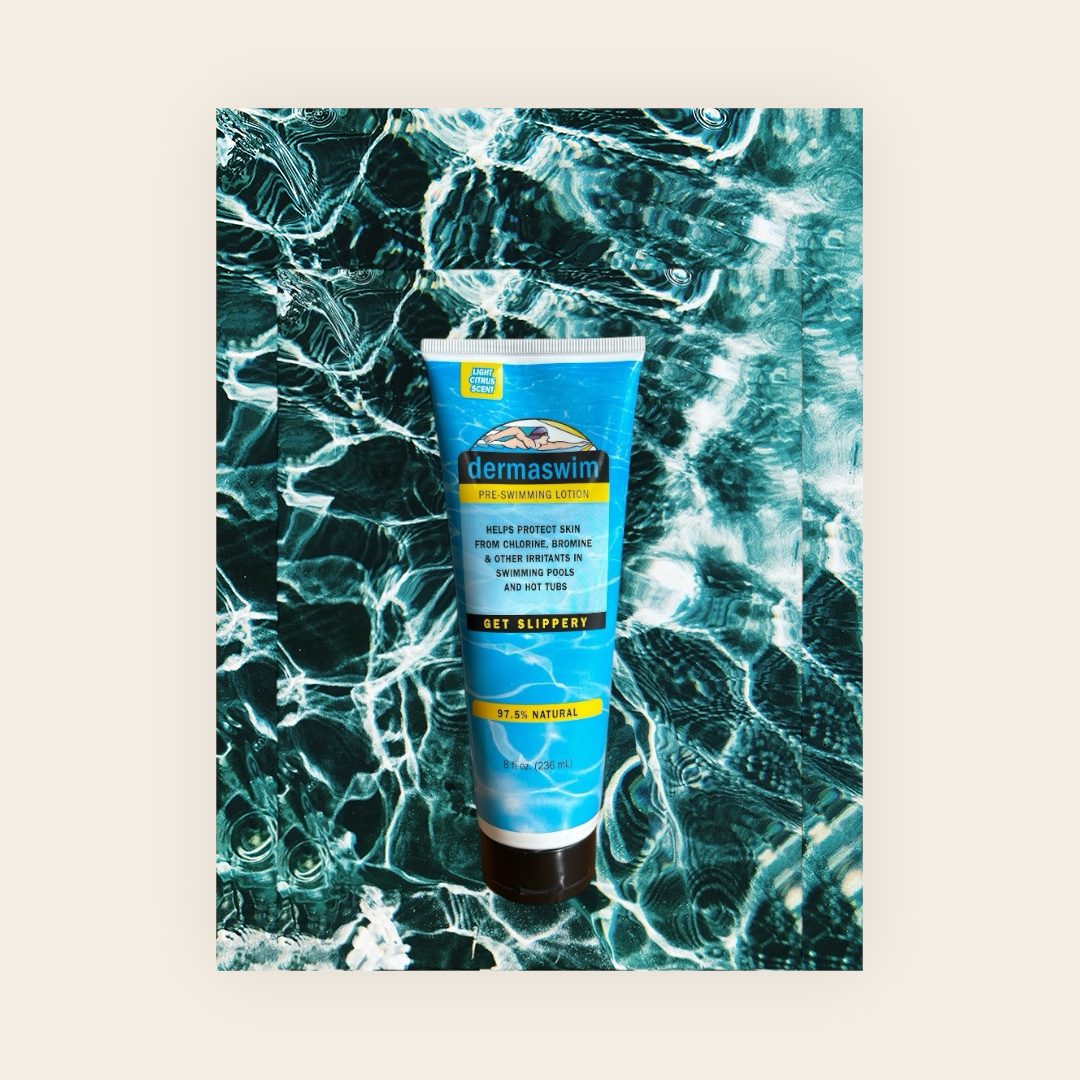
DermaSwim Pre-Swimming Lotion is the world's first pre-swimming lotion, 97.5% natural, paraben-free, and formulated for swimmers of all ages. Apply it to your child's clean, dry skin before they get in. The formula, built around beeswax, coconut oil, and aloe vera, holds during pool exposure rather than washing off in the first few minutes.
⚠ Safety note: DO NOT carry children while you or they are using DermaSwim, as the lotion may make skin very slippery.
A practical routine for parents
Make it part of getting ready: Apply DermaSwim as part of the swim preparation, the same time you're applying sunscreen for outdoor sessions, putting on the swim cap, getting the goggles together.
Keep a tube in the swim bag: The easiest way to make it consistent is to keep DermaSwim where the swim gear lives. If it's in the bag, it gets used. If it's at home, it gets forgotten.
Start at the beginning of the season: Pre-swim protection is most effective as a consistent habit. Start the first swim of the season and maintain it throughout. By mid-summer, when chlorine exposure has accumulated, you'll notice the difference compared to seasons where the routine wasn't in place.
Protect your child's skin before every swim.
DermaSwim is available on . 97.5% natural. Paraben-free.
This content is for informational purposes only. DermaSwim is a cosmetic skin care product, not a medical treatment. If your child has a diagnosed skin condition, consult their pediatrician or dermatologist before use. DO NOT carry children while you or they are using DermaSwim, as the lotion may make skin very slippery. *97.5% natural based on weight/volume of natural-origin ingredients.