If you own a pool, you're in it more than you probably realize. A quick dip to test the water. A lap or two after work. Weekends with the family. It adds up to more time in chlorinated water than most casual swimmers ever log, and your skin is absorbing that exposure every single time.
Most pool owners give a lot of thought to their water chemistry. Chlorine levels, pH balance, alkalinity, the numbers get checked and adjusted regularly. What rarely gets the same attention is what that same chemistry is doing to the people swimming in it, and specifically to their skin.
What chlorine is actually doing to your skin
Chlorine is in your pool because it works. It kills bacteria and pathogens efficiently, keeping shared water safe. The trade-off is that it doesn't distinguish between the microorganisms it's targeting and the natural oils that sit on the surface of your skin.
Your skin has a natural oil layer, sebum, that does several important things. It helps retain moisture, protects against environmental irritants, and keeps the surface of your skin balanced. Chlorine, as a chemical oxidizer, disrupts that layer. The more time you spend in chlorinated water without protecting your skin first, the more consistently that natural oil barrier gets stripped away.
The result is familiar to most pool owners: skin that feels dry, tight, and sometimes itchy after time in the water. That sensation isn't just discomfort, it's your skin telling you its natural moisture barrier has been disrupted. For occasional swimmers, it's a passing inconvenience. For pool owners who are in the water regularly, it becomes a pattern that gets harder to manage as the season goes on.
Pool owners face a specific version of this problem
The challenge for pool owners isn't just exposure, it's the combination of frequency, duration, and maintenance contact. You're in the pool for swims. You're also in the water for checking equipment, testing levels, and every other aspect of ownership that puts you in contact with chemically treated water. That adds up to a chlorine load that's meaningfully higher than what a casual recreational swimmer experiences.
There's also the maintenance dimension. Right after shocking your pool, raising chlorine levels significantly to sanitize the water, the concentration of chlorine is at its highest. Many pool owners will jump in soon after to check the water or clean equipment. That's the moment when skin is most exposed to elevated chemical levels.
The signs to watch for
- Skin that feels progressively drier as the season goes on, not just after individual swims
- Itching that starts during or after time in the pool and takes longer to settle with each passing week
- Pool rash, red, irritated patches that appear after swimming
- A persistent chlorine smell on skin even after showering
- Skin on your hands and arms that looks and feels more weathered mid-season than it did at the start
None of these mean something is wrong with your pool. They mean your skin isn't getting the protection it needs before you get in.
The one step most pool owners skip
Post-swim moisturizer is a good habit. But by the time you're applying it, the chlorine has already been in contact with your skin for your entire session. You're recovering from exposure that already happened.
The step that most pool owners skip entirely is protecting the skin before getting in. A pre-swim barrier, applied to dry skin before you enter the water, creates a physical layer on the skin's surface that helps reduce how much direct chlorine contact your skin experiences during your time in the pool.
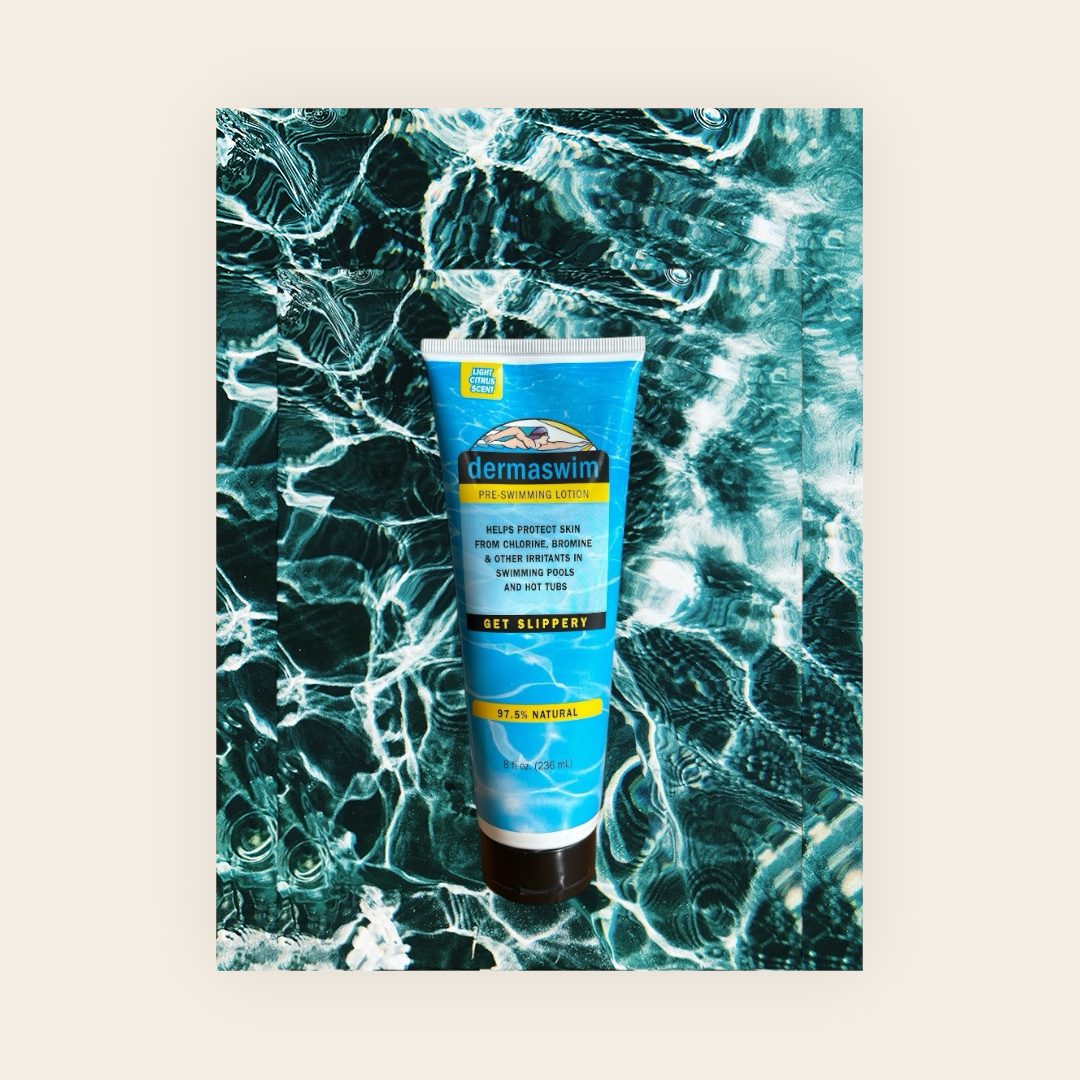
DermaSwim Pre-Swimming Lotion is the world's first pre-swimming lotion, formulated specifically for this purpose. Built around beeswax and coconut oil, ingredients that hold in water rather than washing off, it stays on through your swim and is applied in minutes before you get in. For pool owners who are in and out of the water constantly throughout the season, making pre-swim protection a habit is the most practical change you can make to how your skin holds up.
A practical routine for pool owners
Before any pool contact: Apply DermaSwim to clean, dry skin before entering the water. This applies to swims, maintenance dips, and any time you're going to be in the pool.
After freshly shocked water: Give yourself time after a shock treatment before getting in, check your water chemistry and wait until levels have settled before swimming. When you do get in, pre-swim protection is especially important during this period.
Consistently through the season: The pool owner's problem is cumulative. A routine that you do every time compounds its benefits the same way the chlorine exposure does. Start at the beginning of the season, not after your skin is already showing the wear.
Ready to protect your skin before your next pool session?
DermaSwim Pre-Swimming Lotion is available on . 97.5% natural. Paraben-free. Made in the USA.
This product is for external use only. Not a medical treatment. If you have a diagnosed skin condition, consult your healthcare provider before use. *97.5% natural based on weight/volume of natural-origin ingredients.