Recreational swimmers deal with chlorine. Competitive swimmers live with it. Five to six days a week, one to two hours per session, for months at a time, the chlorine exposure that a competitive swimmer accumulates over a training season is in a different category than what casual pool users experience.
That difference matters enormously for skin. Without a deliberate, consistent skin protection routine, a competitive swimmer's skin undergoes cumulative chlorine stress that compounds throughout the season. By mid-season, skin that felt normal in October can feel significantly drier, more reactive, and more prone to irritation. By the end of the season, the effects can be pronounced enough to affect daily comfort.
The good news: a proper routine, started at the beginning of the season and maintained consistently, changes this picture entirely. Here's what that routine looks like.
The competitive swimmer's challenge
Competitive swimmers face a specific combination of factors that recreational swimmers don't:
Daily exposure. Five or six pool sessions per week means five or six rounds of chlorine contact before the skin has fully recovered from the last one. Each unprotected session adds to the cumulative load.
Long sessions. A 90-minute or two-hour training session means extended, sustained chlorine contact, significantly more than a 30-minute recreational swim.
Year-round training. Competitive swimming often runs across multiple seasons, or transitions directly from one to the next. There isn't a long off-season for skin to fully recover without active protection.
Indoor pool conditions. Most competitive training happens in indoor facilities where chlorine levels are maintained consistently and UV breakdown of the chemical doesn't occur. The pool environment is more concentrated and less variable than outdoor pools.
The complete routine: before, during, and after every session
Before every practice
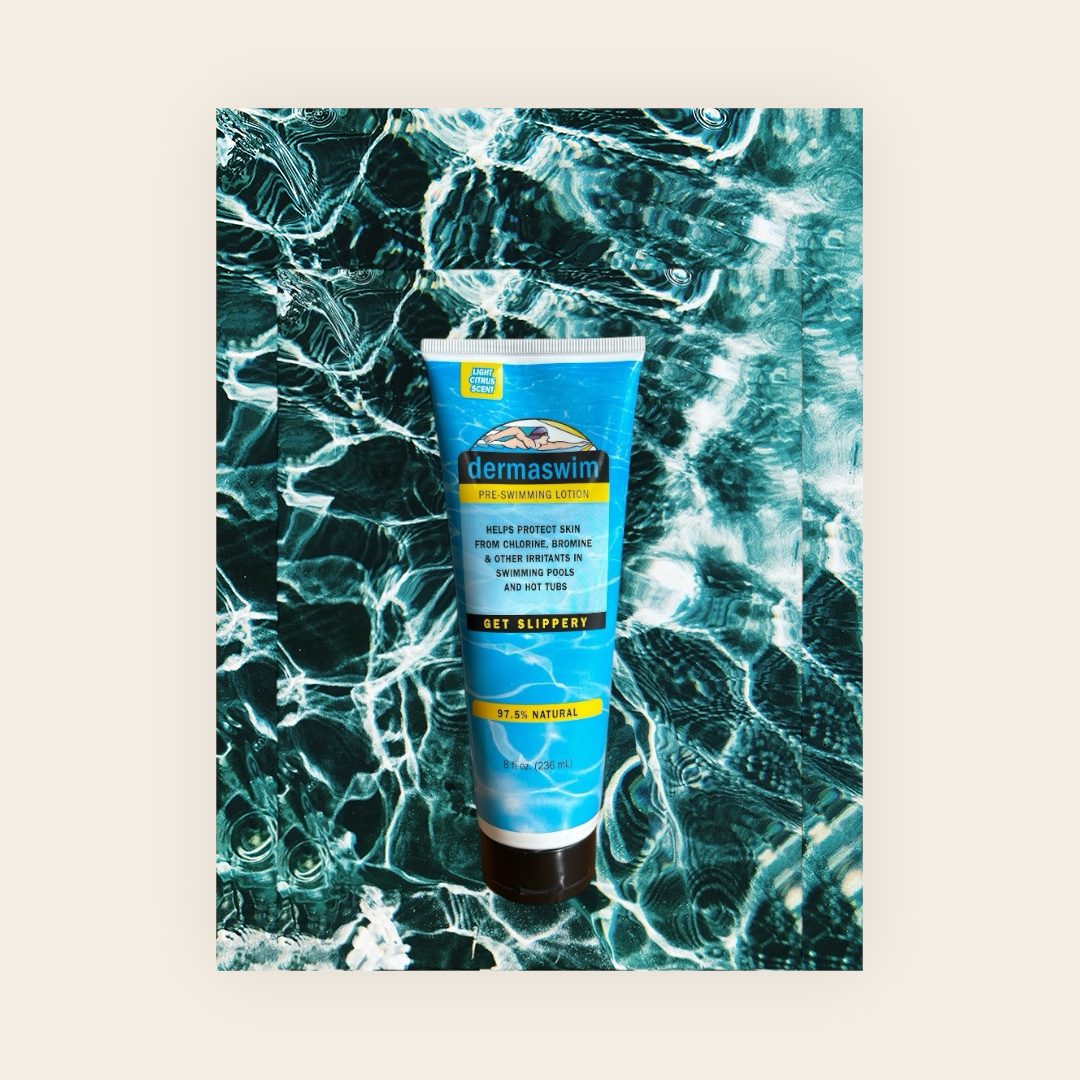
Pre-swim protection is non-negotiable. For competitive swimmers, this is the single most important step in the routine. Apply DermaSwim Pre-Swimming Lotion to clean, dry skin before entering the pool. Cover all exposed skin, arms, shoulders, back, legs, neck.
DermaSwim's barrier, built around beeswax and coconut oil, is specifically formulated to hold during pool exposure. Unlike regular moisturizers that wash off within minutes of swimming, the wax-based formula stays in place through a full training session. For competitive swimmers doing back-to-back sessions or doubles, apply before each session.
Rinse before entering the pool. A brief rinse with fresh water before getting in pre-saturates your skin with clean water, which helps reduce how much chlorinated water the skin absorbs during your session. DermaSwim has already set, it holds through this rinse.
During practice
The protection is in place. Train normally. Pay attention to how your skin responds during sessions as a general health indicator, if something feels significantly different from your baseline, that's worth noting.
Immediately after every practice
Rinse off the moment you leave the pool. Do not wait. For competitive swimmers who train repeatedly in the same day, minimizing how long pool chemicals sit on skin between sessions is particularly important. Get to the shower as quickly as possible after your last set.
Shower thoroughly with a gentle body wash. A mild, fragrance-free cleanser removes pool chemical residue without adding additional chemical stress to already-exposed skin. Harsh soaps compound the irritation, avoid them in your post-swim routine.
Apply moisturizer while skin is still slightly damp. A fragrance-free, ceramide-containing moisturizer applied while skin still has surface moisture helps lock in hydration and supports the skin's recovery process. For competitive swimmers, this isn't optional, it's part of the recovery routine, the same as nutrition and sleep.
Weekly maintenance
Monitor your skin's condition. Over the course of a season, a competitive swimmer's skin tells a clear story. Watch for signs that the cumulative load is building up: skin that's progressively drier week over week, irritation that takes longer to settle after sessions, pool rash that's becoming more frequent or more intense. These are signals to assess your routine and ensure you're being consistent with pre-swim protection and post-swim care.
Keep your skin hydrated off the pool deck too. Competitive swimmers' skin is under consistent stress, drinking enough water, maintaining overall skin hydration, and applying moisturizer on non-swim days all contribute to how well skin holds up through a long training season.
Managing skin through the hardest parts of the season
Pre-season and post-season transitions are when competitive swimmers tend to feel the skin effects most acutely. Early in a season, when volume and intensity ramp up quickly, the sudden increase in chlorine exposure can produce more pronounced skin reactions than mid-season when the body has adapted to the training load. Start your full protection routine from the very first day of training, not once the season is underway.
During peak training periods, high-volume blocks, taper, championship meet preparation, maintain the full routine without shortcuts. These are often the moments when routine maintenance gets deprioritized. For skin, they're the moments when consistency matters most.
For swimmers with sensitive skin
Competitive swimmers whose skin is naturally more reactive have less margin than those with typical skin. Every unprotected session is a larger setback. For sensitive-skinned competitive swimmers, pre-swim protection with DermaSwim is even more important, and so is being diligent about the post-swim routine. If you have a diagnosed skin condition, work with your dermatologist on a routine that accounts for your training schedule.
What's in your swim bag
For competitive swimmers, the pre- and post-swim routine is most consistent when it requires no decisions at practice time. Keep the following in your bag:
- DermaSwim, apply before every session
- A gentle, fragrance-free body wash for post-swim shower
- A fragrance-free moisturizer for after the shower
The routine is the same every session. Apply, swim, rinse, wash, moisturize. When it's automatic, it gets done.
Build the routine from the first day of the season.
DermaSwim Pre-Swimming Lotion is available on . $19.96 / 8 oz. 97.5% natural. Paraben-free.
For external use only. DermaSwim is a cosmetic product, not a medical treatment. If you have a diagnosed skin condition, consult your healthcare provider before use. *97.5% natural based on weight/volume of natural-origin ingredients.