Ask any regular swimmer and they'll know the feeling. You get out of the pool, dry off, and within the hour you're dealing with some combination of dry skin, itching, redness, and that distinct chlorine smell that a shower doesn't fully remove. These post-pool skin problems are so common among swimmers that most people have come to accept them as just part of swimming.
They don't have to be. Here's what's behind each of the most common issues, and what you can do about all of them.
Dry, tight skin after swimming
This is the most universal post-swim complaint. Almost every regular swimmer knows the sensation, skin that feels stripped, tight, and uncomfortably dry within the first hour after a session.
The cause is straightforward: chlorine disrupts the natural oil layer on your skin's surface. That oil layer, sebum, is what helps your skin retain moisture. When it's stripped away by repeated chlorine contact, your skin loses moisture at a faster rate than it otherwise would. The result is that tight, parched feeling that sends you reaching for lotion.
Post-swim moisturizer helps restore some of what's been lost. But the most effective intervention is reducing how much stripping happens during the swim in the first place, which means protecting skin before you get in.
Pool rash and post-swim redness
Pool rash is one of the most common skin complaints among swimmers. It appears as redness, irritation, or small raised bumps on areas of skin that were in direct contact with pool water. It can develop during a swim or in the first hour or two afterward.
The direct cause is chlorine contact on skin that doesn't have adequate protection. The natural oil layer that helps shield skin from irritants is disrupted, and the result is visible irritation at the surface. People with naturally more reactive skin tend to get it more easily and more severely, but it can develop in anyone who swims regularly without protecting their skin first.
For most swimmers, pool rash from a single session will ease within 24 to 48 hours. For swimmers who get it consistently, the answer is prevention, not just treating it after every swim. If rash symptoms are severe, persistent, or getting worse, see a dermatologist.
Itching during and after swimming
Itching during or after pool use is another direct consequence of chlorine contact on skin that hasn't been protected. When the natural oils that protect your skin's surface are disrupted, the skin becomes more reactive. The itching sensation is essentially your skin registering that disruption.
The intensity varies. Some swimmers notice mild itching that fades quickly. Others experience persistent itching that makes the hours after a swim genuinely uncomfortable. Frequency compounds the problem, the more often you swim without protection, the more depleted your skin's natural oil layer becomes, and the more readily it reacts.
Chlorine smell that won't wash off
That persistent chlorine smell on skin after swimming isn't just chlorine itself, it's chlorine that has bonded with proteins on your skin's surface and in your hair. A standard shower rinses away surface chlorine, but the bonded residue requires a more thorough rinse to shift.
The fix is a thorough post-swim shower, not just a rinse. Using a gentle body wash specifically helps break down the residue that water alone doesn't remove. Rinsing promptly after leaving the pool also makes a meaningful difference in how thoroughly it clears.
Skin that gets worse as the season goes on
This is the pattern that regular swimmers notice most clearly. Skin that felt fine in June feels noticeably drier and more irritated by August. The reason is cumulative chlorine exposure: each unprotected swim depletes the skin's natural oils a little further, and without adequate recovery time and protection, the deficit compounds over the course of the season.
The swimmers who avoid this pattern are the ones who have a consistent pre-swim protection routine from day one of the season. Prevention across the season produces a fundamentally different result than trying to recover at the end of it.
The upstream fix: protect before you swim
Every one of the problems above has the same root cause: chlorine contact on unprotected skin. Post-swim care helps manage the aftermath. But the most effective answer to post-pool skin problems is a pre-swim barrier that reduces how much of that contact happens during your session.
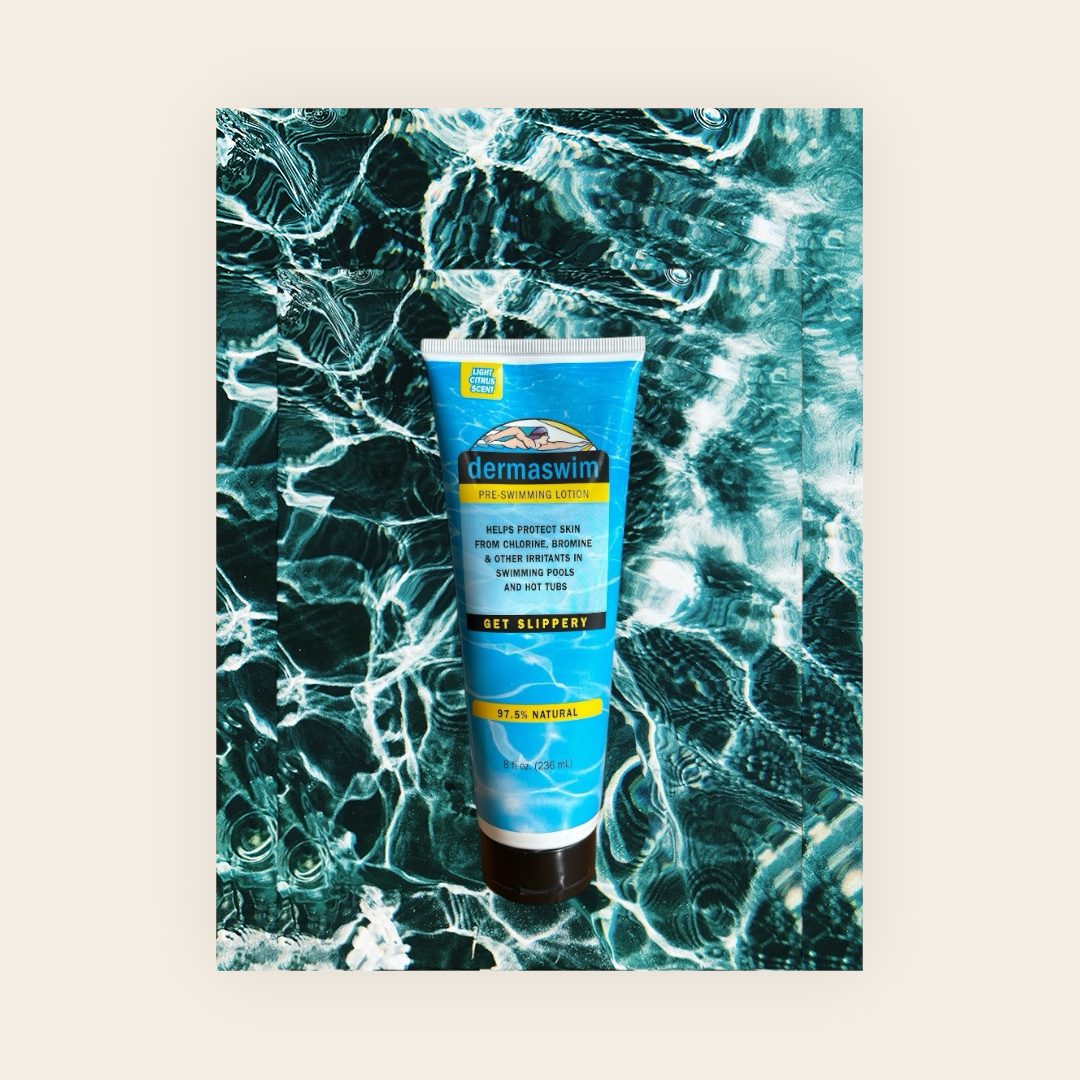
DermaSwim Pre-Swimming Lotion is applied to clean, dry skin before you get in the pool. Its formula, built around beeswax, coconut oil, aloe vera, green tea extract, and grapefruit seed oil, creates a physical protective layer on the skin's surface that holds through your swim session. 97.5% natural. Paraben-free. The world's first pre-swimming lotion.
Pair it with a consistent post-swim routine, rinse immediately, gentle body wash, fragrance-free moisturizer, and most of the post-pool skin problems that feel inevitable become much less frequent.
Address the problem before it starts.
DermaSwim is available on .
Why pre-swim lotion is more effective than post-swim moisturizer →
This content is for informational purposes only. DermaSwim is a cosmetic skin care product, not a medical treatment. If you have a diagnosed skin condition, consult your healthcare provider before use. *97.5% natural based on weight/volume of natural-origin ingredients.