You've probably felt it. That burning or stinging sensation on your skin during or after a swim session. Some swimmers notice it on their shoulders and neck. Others feel it on their face or around their eyes. It's uncomfortable enough to be distracting, and most people just accept it as part of swimming.
It doesn't have to be.
That burning sensation is your skin's response to chlorine contact. Understanding what's causing it is the first step to preventing it.
What's actually happening when your skin burns after swimming
Chlorine is a chemical oxidizer. When it contacts your skin, it interacts with the natural oils on your skin's surface, the same oils that protect your skin's moisture barrier and help keep irritants out. As those oils are stripped away, your skin's outer layer becomes more vulnerable. What you're feeling as "burn" is the irritation that results from that disruption, particularly on skin that's already spent an extended period in contact with pool chemicals.
The sensation tends to be more intense in certain areas: anywhere the skin is thinner, anywhere that got extended direct contact with the water, and anywhere that was already dry or compromised before the swim. It's also more pronounced in people whose skin is naturally more reactive, and in anyone who swims regularly without any kind of pre-swim protection.
Why some swimmers feel it more than others
Not every swimmer notices pool burn equally. Several factors influence how intensely your skin responds to chlorine contact:
How often you swim. Occasional swimmers often don't notice pool burn much at all. Skin has time to recover between sessions. Regular swimmers, training several days a week, experience cumulative chlorine exposure that leaves the skin's natural oil layer progressively more depleted. With less protection each session, the same chlorine concentration produces a stronger response.
How long your sessions are. An hour-long lap swim involves significantly more chlorine contact than a 20-minute recreational swim. The longer the session, the more sustained the exposure.
Whether the water is well-balanced. Pool water that is pH-balanced and properly maintained is less irritating than water that's out of balance. Freshly shocked water is particularly concentrated. If your skin burns badly after a shock treatment, that's a direct result of elevated chlorine levels.
Your individual skin sensitivity. Some people's skin is simply more reactive to chemical exposure. Their skin responds faster and more intensely to the same conditions that others barely notice.
The straightforward fix: protect before you swim
Post-swim care helps. Rinsing off promptly after leaving the pool and applying a moisturizer supports skin recovery. But that approach is still responding to irritation that has already occurred. The more effective intervention happens before you get in the water.
A pre-swim barrier lotion applied to your skin before swimming creates a physical layer on the skin's surface. The barrier reduces how much direct chlorine contact your skin experiences during your session, which means less disruption to your skin's natural oils, and less of the burning sensation that follows.
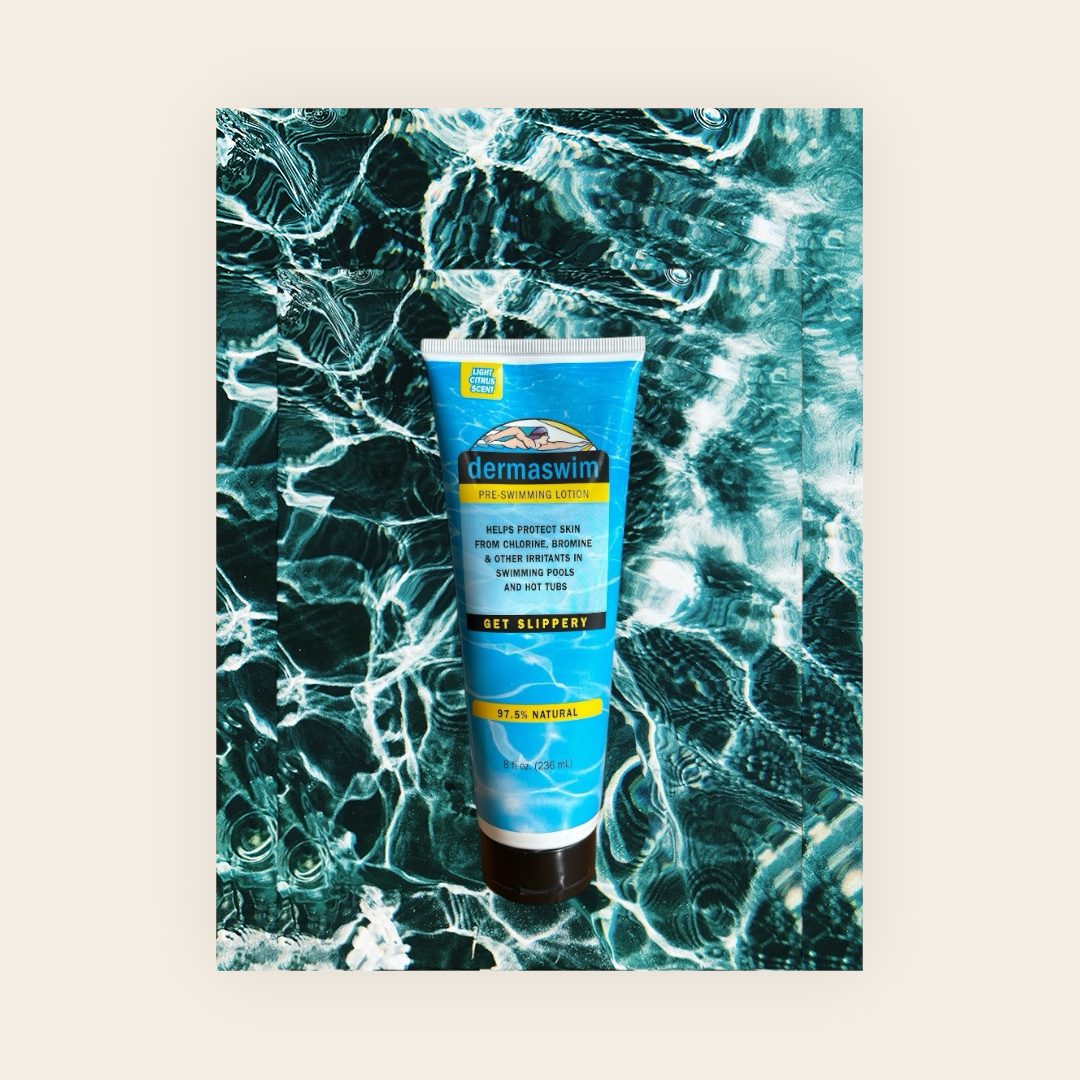
DermaSwim Pre-Swimming Lotion is built for exactly this. Applied before you get in, the formula, built around beeswax and coconut oil, adheres to skin and holds through your swim. It's the world's first pre-swimming lotion. 97.5% natural, paraben-free, and designed to work in the pool, not just on dry skin.
A complete prevention routine
Before swimming: Rinse skin with fresh water first, skin that's pre-saturated with clean water absorbs less pool water. Then apply DermaSwim before getting in.
During your swim: Pay attention to how your skin feels. If you're experiencing significant burning during a session, it may be worth checking whether the pool's water chemistry is balanced.
If burning skin after swimming is something you experience consistently, the most impactful change you can make is adding pre-swim protection to your routine. Most swimmers who try it notice a difference within the first few sessions.
Stop the burn before it starts.
DermaSwim Pre-Swimming Lotion is available on .
Why pre-swim lotion works better than post-swim moisturizer →
This product is for external use only. Not a medical treatment. If you have a diagnosed skin condition, consult your healthcare provider before use. *97.5% natural based on weight/volume of natural-origin ingredients.